General:
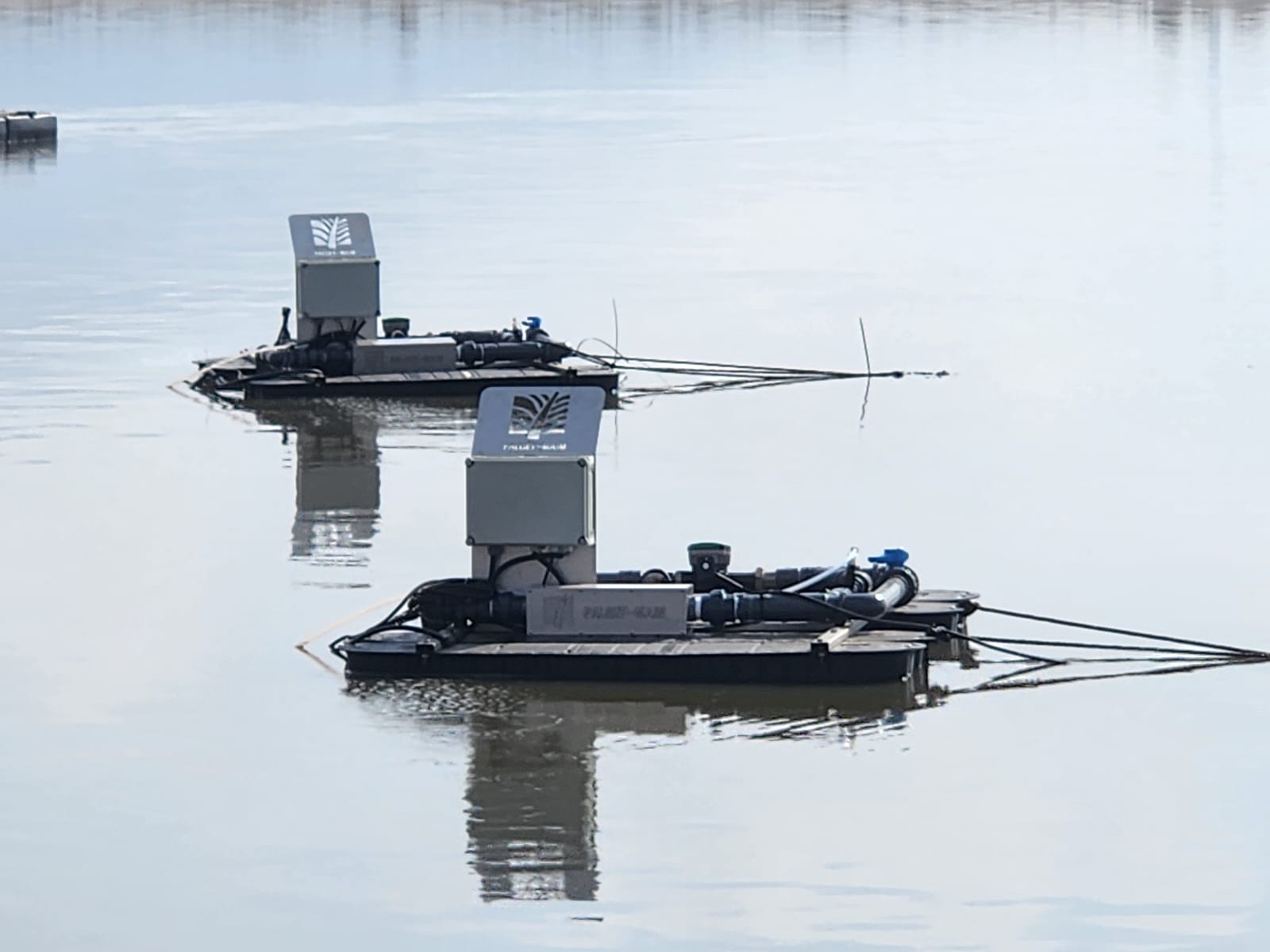
Improvement of effluent quality in the reservoir during the upgrading period of the regional wastewater treatment plant (WWTP), by using floating PMnB systems that generate ozone-based nano-bubbles.
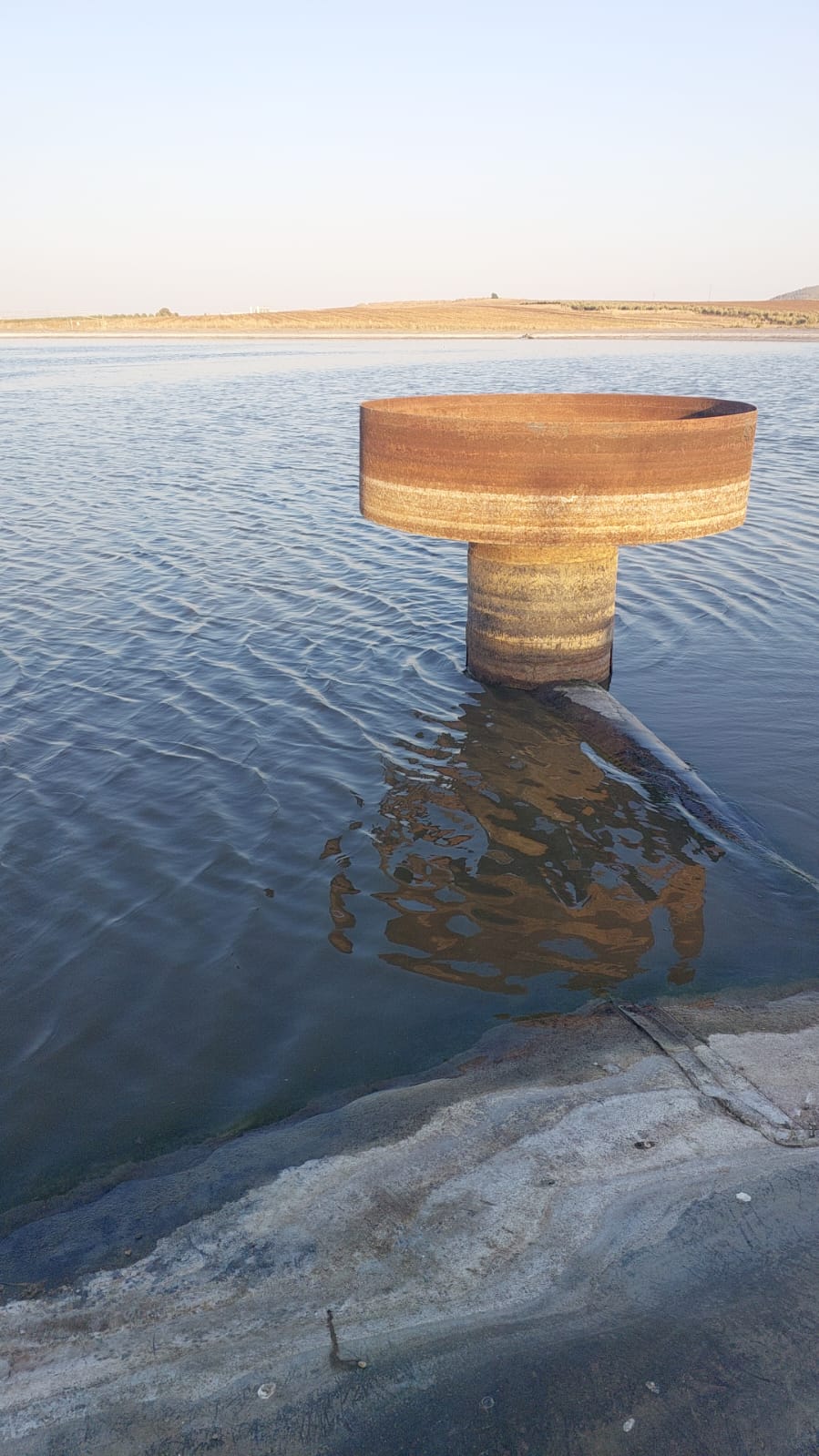
The WWTP receives a daily flow of 7,500–8,000 m³/day. As part of the extensive WWTP upgrade works, four treatment ponds were cancelled, leaving only one sedimentation pond and one aeration basin in use. As a result, all effluent is discharged into a reservoir with a volume of 390,000 m³. The cancellation of treatment ponds significantly worsened effluent quality in the reservoir, prompting the health authorities to demand additional treatment to reach secondary effluent quality standards.
To complete the missing treatment process, it was decided to improve the effluent in the reservoir. The plant owners evaluated several aeration technologies and chose PMnB, an advanced oxidation technology using ozone-based nano-bubble systems. The selected system has a power rating of 22 kW, compared to an alternative with 8 surface aerators of 20 kW each (total: 160 kW), offering an expected energy saving of 180,000 NIS per year.
Approvals and Work Plan:
The system was submitted for approval to the Ministry of Health (Northern District) and received the required authorization.
Project Objective:
To improve the effluent quality in the reservoir and meet irrigation water standards using advanced oxidation through nano-bubbles with ozone.
Work Plan:
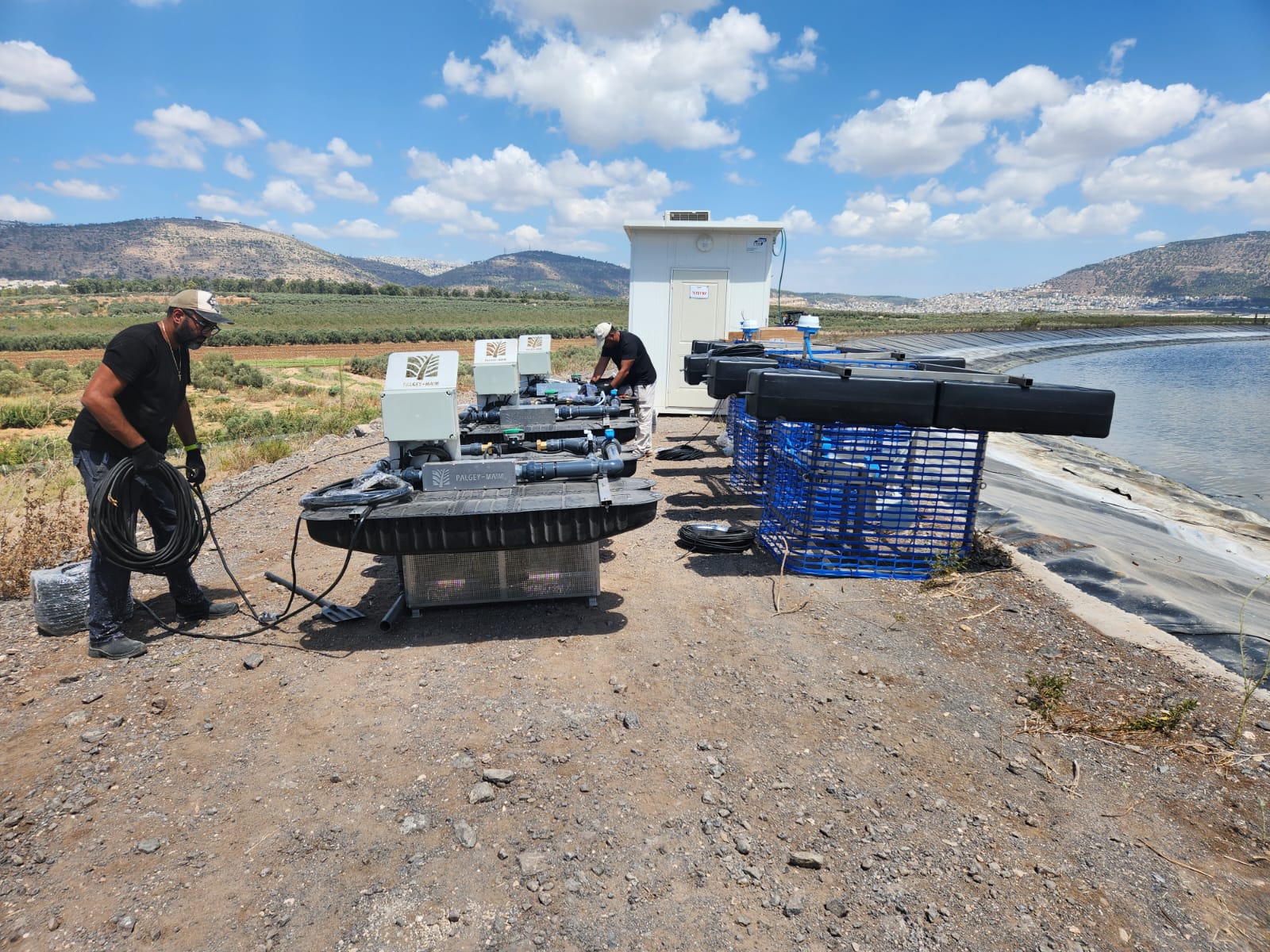
• Installation of 3 PMnB 848 floating nano-bubble ozone systems (30 m³/h each, 1.2 kg O₃/day)
• Installation of 3 “RIO” units for thermal stratification breaking
• Maintaining optimal effluent level in the reservoir to maximize retention time
Effluent Quality Entering the reservoir After partial treatment in sedimentation-aeration pond:
| Date | BOD (mg/L) | TSS (mg/L) |
| August | 120.0 | 189.7 |
| September | 170.0 | 162.0 |
| October | 150.0 | 234.8 |
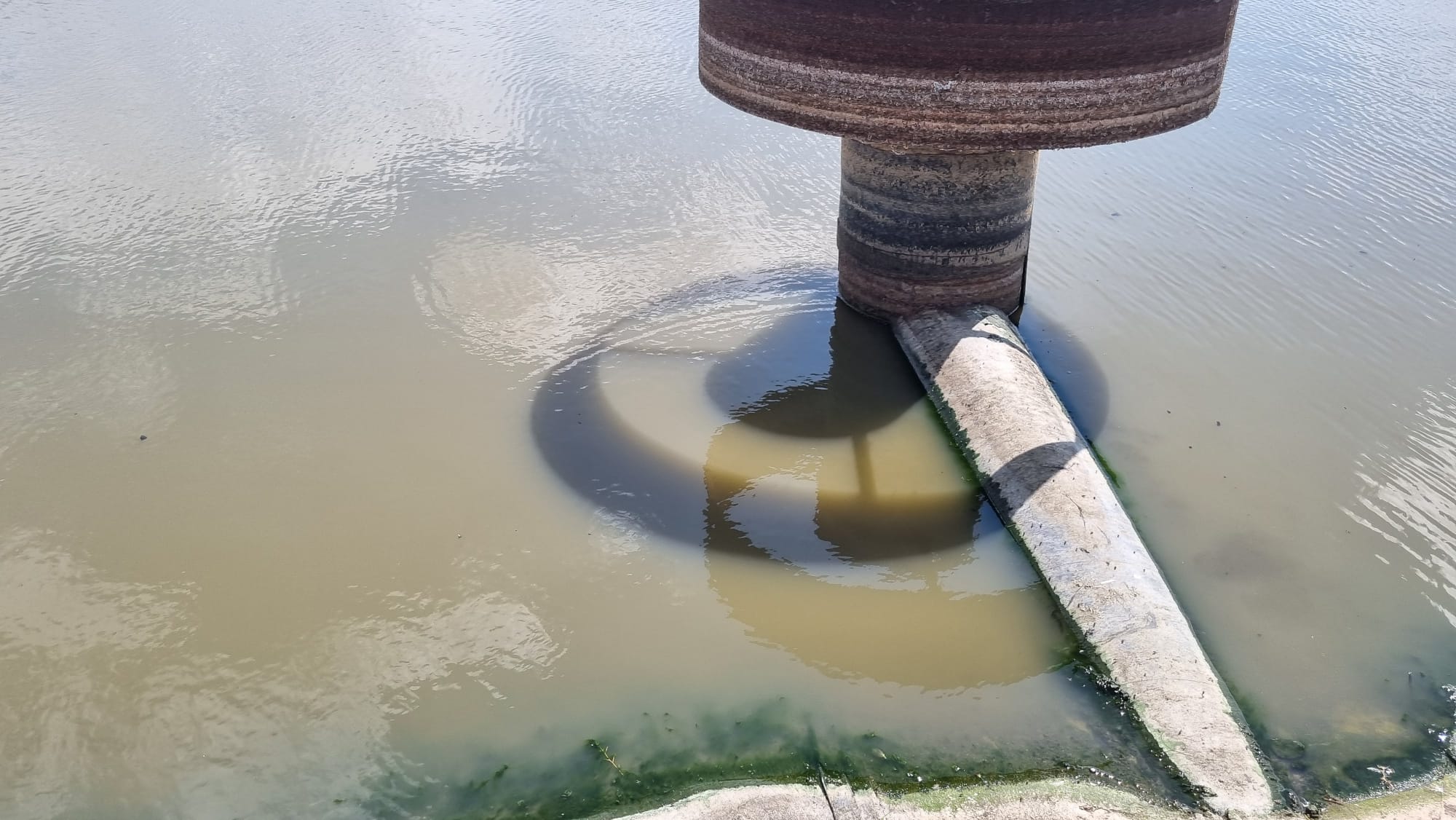
Before activation of the PMnB nano-bubble systems, the water quality in the reservoir was significantly below the required standards. Upon activation, an immediate visual improvement in effluent colour was observed, along with a substantial improvement in effluent quality.
Treatment Results with PMnB Nano-Bubbles in the reservoir:
| Parameter | COD (mg/L) | BOD (mg/L) | TSS (mg/L( | NTU |
| Reservoir Inlet | 356 | 170 | 147 | 151 |
| After Nano Treatment | 116 | 28 | 31.8 | 33 |
| Removal Efficiency (%) | 67% | 84% | 78% | 78% |
Conclusions:
PMnB nano-bubble system, in combination with ozone, is highly effective in reducing organic load and suspended solids in the reservoir effluent. The system meets and even exceeds the Ministry of Health’s effluent quality requirements.